Alarming Trends Beyond the Numbers
Antisemitism on Canadian Campuses
The 2025 academic year was marred by incidents of antisemitism and repeated attempts to push the boundaries of academic freedom in favour of antisemitic rhetoric, leaving Jewish students, faculty, and staff feeling increasingly vulnerable and ostracized. B’nai Brith Canada responded to an alarming number of reports from Jewish members of campus communities across the country who felt unsafe and unwelcome at their institutions.
Sadly, the examples below constitute only a small sample of the multitude of incidents that targeted Jewish attendees and employees of Canadian post-secondary institutions and compromised Jewish life on campus in 2025. Canadian universities, with few exceptions, continued to foster climates adverse to the success and well-being of Jewish faculty, staff, and students.
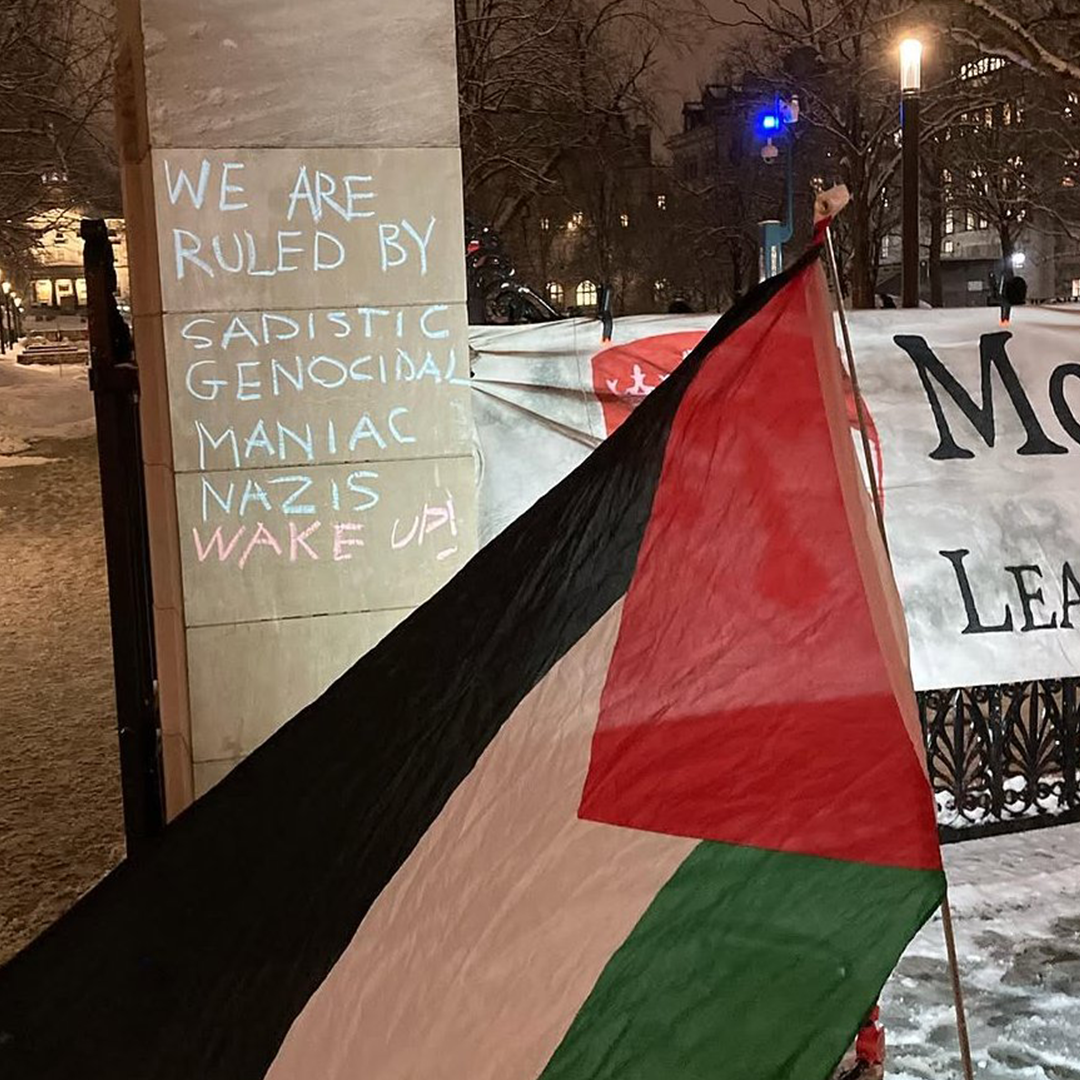
Faculty and staff played a major role in the development of hostile campus environments. In March 2025, the Canadian Association of University Teachers released a biased report that portrayed efforts to combat antisemitism on campuses as threats to freedom of expression. Similarly, problematic reports and motions were adopted and passed by faculty networks and associations across the country. In November, faculty members at the University of Guelph even endorsed a protest targeting their institution’s Jewish students. A Hakenkreuz (Nazi Hooked Cross) was graffitied on a student’s dorm room door later in the month, underscoring the hostile environment at the university.
Terrorism, marketed as “resistance”, remained a popular cliché embraced by student clubs at Canadian universities. Blurring the boundaries of the free exchange of ideas, many held workshops or exhibitions that sanitized acts of terror, condoning them as anti-colonialist and anti-imperialist. Student groups hosted, often without consequence, extremist speakers, some of whom celebrated listed terrorist organizations, called for the annihilation of Jews, and advanced antisemitic conspiracies. In January, the University of Toronto cancelled an event platforming a convicted member of the Popular Front for the Liberation of Palestine, a listed terrorist entity in Canada, only after B’nai Brith Canada intervened.
A June 2025 report commissioned by the then Quebec Minister of Higher Education, Pascale Déry, following an inquiry into “Situations Involving Behaviours That Could Reasonably Raise Fears for the Physical or Psychological Safety of Students,” shed further light on the issue. The report highlighted the lack of guidelines pertaining to the hosting of speakers on campus by student clubs as a major concern. The lack of sufficient oversight from post-secondary administrators enabled hatemongers and extremist ideologues to be platformed at Canadian campuses.
On multiple occasions in 2025, the incitement devolved into violent antisemitism and threats to Jewish students. In November, an off-campus event hosted by a Jewish student group at Toronto Metropolitan University was attacked by a masked mob. In the chaos that ensued, several people were injured and property was damaged. Later that month, the phrase “Kill all Jews” was found scrawled on a bathroom wall at Concordia University.
In May 2025, B’nai Brith Canada exposed the existence of a Discord server used by Quebec medical school applicants and attendees that hosted gross antisemitic, racist, misogynistic, and hateful rhetoric. This forum, which was populated by aspiring medical professionals, some of them actively enrolled in medical programs, was filled with messages containing antisemitic conspiracies, Holocaust diminishment and denial, and threats to kill Jews.
Throughout 2025, as in past years, B’nai Brith Canada remained at the forefront of efforts to protect the rights and well-being of Jewish members of Canadian campus communities. In April, B’nai Brith Canada supported a class action lawsuit launched by a McGill University student. The action, which was brought after the University failed to protect its Jewish students from antisemitism, harassment, and discrimination in the wake of the October 7, 2023, Hamas-led terror attacks in Israel, is seeking financial compensation for the affected students as well as institutional accountability. In December, B’nai Brith Canada launched Break the Hate, a program that empowers university students to become anti-hate ambassadors. Through impactful legal and grassroots actions, B’nai Brith Canada aims to ensure that campus environments remain spaces conducive to the success of all Canadian post-secondary students.


Antisemitism in Canadian Schools
In 2025, elementary and high schools across the country, institutions that are meant to provide safe learning environments for all students, continued to be compromised. Throughout the year, Jewish students encountered hate and anti-Zionist sentiments persisted both in classrooms and at the institutional level. The following paragraphs highlight some of the antisemitism they experienced across Canada in 2025.
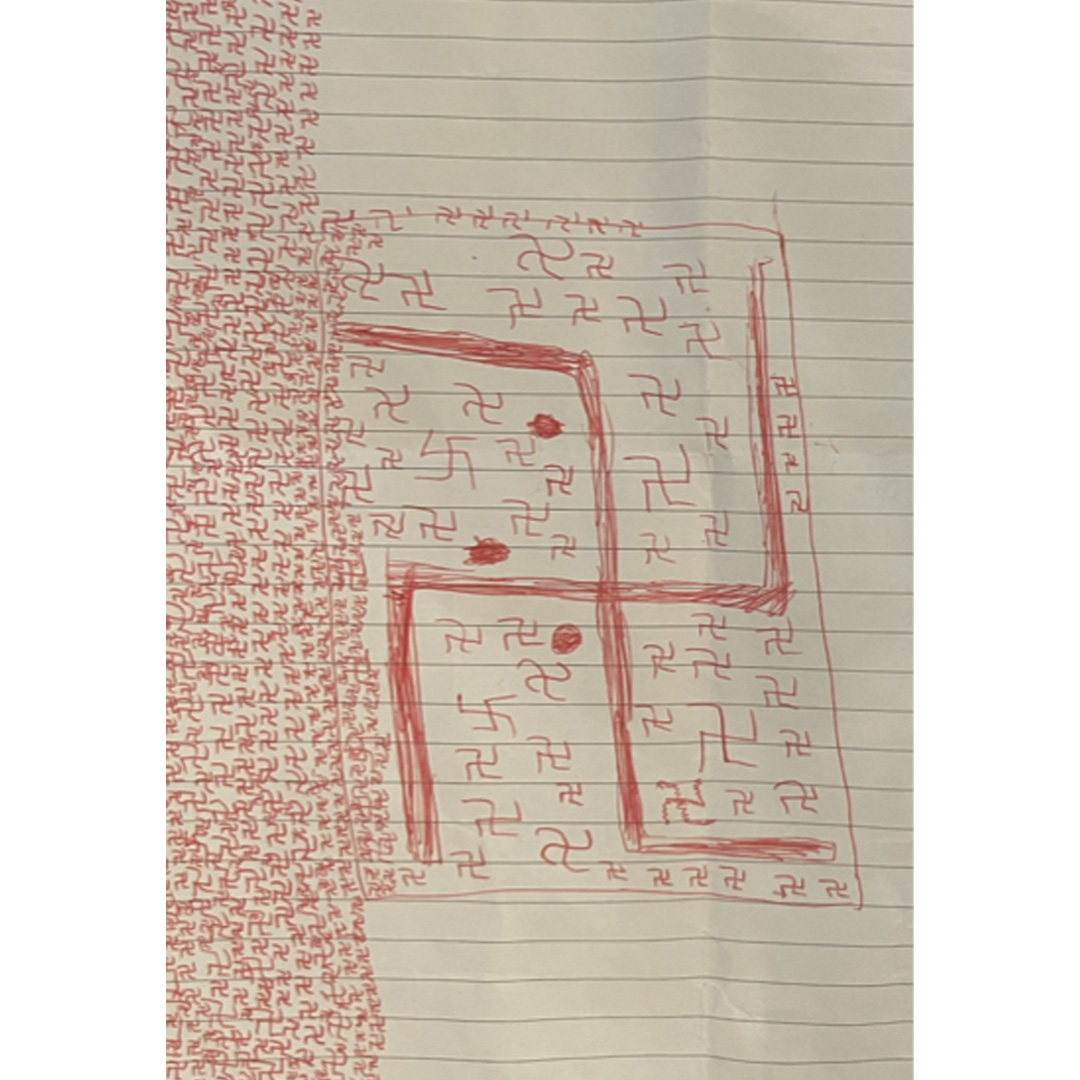
Over the last year, Canadian schools continued to be targets of hateful and antisemitic graffiti. With alarming frequency, schools and school properties were used as a canvas by vandals promoting hate against Jews and other marginalized groups. An incident of graffiti, involving a Hakenkreuz (Nazi Hooked Cross) at an Ottawa-area high school in November, was labelled both antisemitic and Islamophobic. In what police described as an antisemitic incident, the same Nazi symbol was spray-painted on the wall adjacent to the playground of a Montreal-area elementary school in April and left on the property of an elementary school in York Region in May. It was not just Nazi iconography that was used to target and intimidate Jewish students; the words “F—k Jews” were scrawled in a bathroom stall at a middle school in Winnipeg.
Jewish elementary and high school students were also the victims of antisemitic attacks and threats, both in-person and online. In an incident from September that resulted in criminal charges, the social media group chat associated with a North Bay-area high school football team became a cesspool for hateful content that included threats to kill and lynch Jewish individuals. Also in September, a hatemonger accosted Jewish middle school students in Toronto as they took public transport home from school. The fellow passenger verbally assaulted the students, using a hateful anti-Jewish slur and telling them to go back to the concentration camps.
Moreover, across the country, antisemitism has permeated the systems that have been put in place to protect our youth. School boards in Canada have repeatedly abdicated their responsibility to take necessary steps to proactively protect Jewish students; they have failed to adequately react to antisemitism festering in their schools and have permitted divisive and inciting rhetoric to be platformed in their meetings. For example, at a Toronto District School Board meeting, during which the Board’s Policy and Planning Committee was to receive a report on antisemitism, instead of allowing grassroots Jewish voices to be heard, speakers were permitted to invoke antisemitic tropes, demonize Zionists, and spread misinformation.
Throughout 2025, B’nai Brith Canada continued to receive reports from parents whose children experienced antisemitism at school. We also repeatedly received reports of teachers, school board employees, and trustees engaging in antisemitic conduct online. For the most part, the response at the Board level has been wholly inadequate.
B’nai Brith Canada continues to raise the alarm and demand more from our Ministers of Education and school boards. To confront the systemic antisemitism rampant in schools across the country, it is paramount that school boards and provincial governments from coast to coast effectively and efficiently address antisemitism within their jurisdictions. All students have the right to attend school without fear and to fully embrace their identity. It is time to ensure that right is upheld for all students, including Jewish students in Canada.


The McGill Class Action Lawsuit
Following McGill’s failure to protect Jewish students from antisemitism, harassment, and discrimination in the wake of the October 7, 2023, Hamas-led attacks in Israel, the McGill Class Action Lawsuit was brought forward in April 2025 by a Jewish student, with support from B’nai Brith Canada. The lawsuit challenges McGill University’s failure to provide Jewish students with a campus environment that is safe, respectful, and free from discrimination: obligations McGill sets out in its own policies and is required to uphold under Canadian law.
A class action is the only legal vehicle capable of addressing harm at this scale, representing the collective experience of students, and demanding institutional change that cannot be ignored. In this case, the lawsuit seeks financial compensation for all affected students, as well as institutional accountability through punitive damages and a binding legal precedent.
Universities shape culture, leadership, and the boundaries of public discourse. When antisemitism is tolerated or excused on campus, it does not stop there—it spreads. However, when a leading academic institution is held to account, every other university pays attention. If universities learn that they can look away, delay, deflect, and leave Jewish students to shoulder the danger alone, nothing changes. However, when a major institution is compelled to take its duties seriously, to uphold the standards it publicly claims to champion and is legally required to do so, it reshapes expectations across the entire higher‑education system.
What happens at McGill does not stay at McGill; its policies, its culture, and its responses to internal and external pressures are a model for what is tolerated, what is ignored, and what is enforced across every campus in the province—and across Canada.